
Godox EazyFlow quick-release softbox – thoughtful design and ergonomic handling
Light remains the most important element of a softbox, but before it reaches the photographed scene, the mechanics of the modifier play a key role. The frame must maintain the correct shape of the softbox, the fabric needs to be properly tensioned, the speedring has to transfer the load of the entire structure to the light, and the diffusion layers should remain at a precisely defined distance from the light source. In a traditional softbox, all these elements work well, but preparing them for use takes time and effort.
The Godox EazyFlow series does not attempt to replace the traditional principles of working with light modifiers. From an optical perspective, it still relies on a proven arrangement: a silver interior, carefully designed softbox depth, two levels of diffusion and optional control over light spread with a grid. Instead, the focus has shifted to the way the entire structure is set up, folded and mounted. Rather than assembling the softbox from scratch each time it is used, you simply unfold the ready-made frame, which automatically assumes its working geometry.
Rapid-release mechanism – no more rebuilding the frame from scratch

The EazyFlow design is based on a rapid-release mechanism. The rods forming the frame remain permanently connected to the central section of the modifier, so there is no need to insert them individually into the speedring and tension the corners of the softbox before every session. When opened, the entire structure unfolds and locks into its working position with a single movement. The softbox fabric reaches the correct tension, while the frame maintains the geometry required to keep the diffusers at the proper distance from the light source. After the shoot, the lock is released with a button, the tension of the frame is reduced and the softbox can be folded without taking it apart into separate components.
The setup time is around one second. The figure itself looks impressive in a specification sheet, but the practical advantage of this solution is not simply about saving several dozen seconds. More importantly, there is no need to rebuild the modifier frame and wrestle with the rods every time it is used. This is especially important with large softboxes, where tensioning the fabric requires noticeable force, as well as during mobile productions where the lighting setup is assembled and packed away several times in a single day.
A flat transport profile instead of an umbrella-style construction
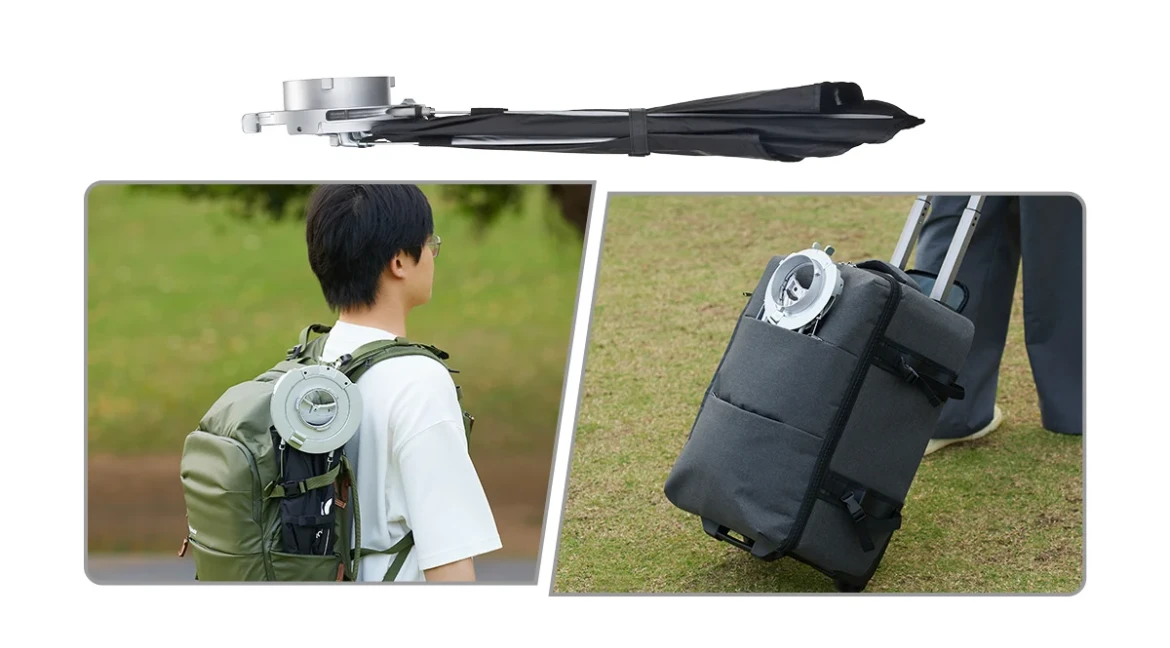
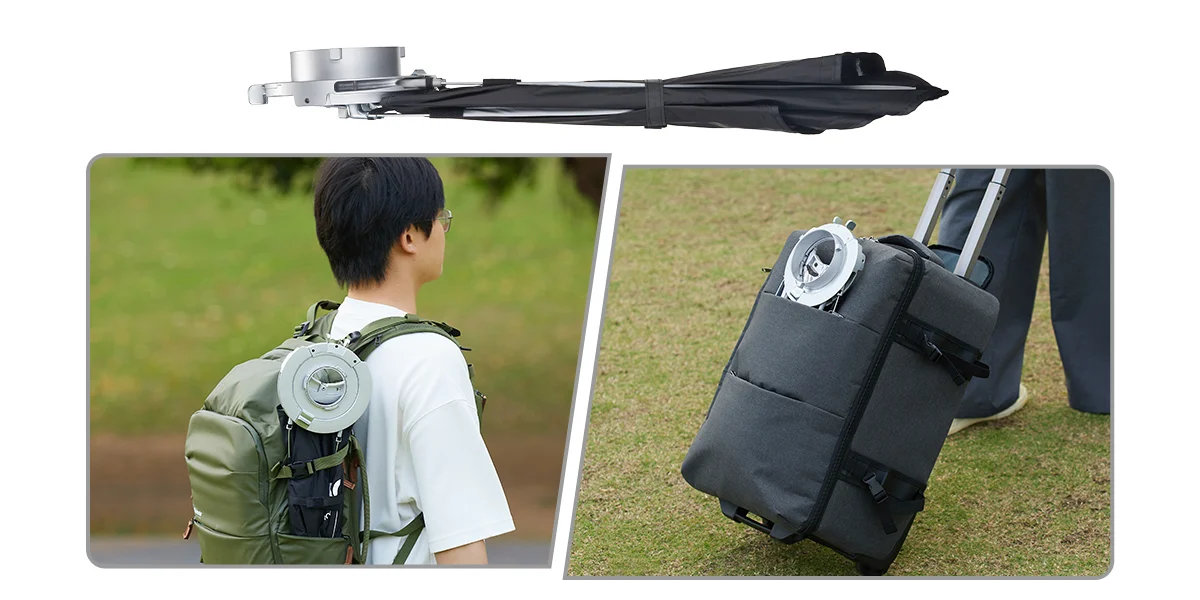
Quick softbox setup is not an entirely new idea in the world of light modifiers or in the Godox range, which also includes umbrella-style designs such as the highly practical UL-BOX series. EazyFlow, however, develops this idea in a slightly different direction. In a traditional umbrella system, the frame operates around a central shaft, which still results in a relatively large circumference and overall volume when folded. This is why EazyFlow has been designed to form as flat a package as possible when collapsed.
Of course, a large softbox still remains a long piece of equipment due to the physical length of the rods themselves – for example, the rectangular 60 × 90 cm version measures approximately 83 cm when folded, while the Octa 120 is around 100 cm long. The key advantage, however, is the reduced thickness. This flat profile allows several modifiers to be stacked in cases or vehicle luggage compartments, making it much easier to organise space in a car, where the main challenge is often not the weight of the equipment but its awkward volume.
Metal, replaceable speedring as a structural component
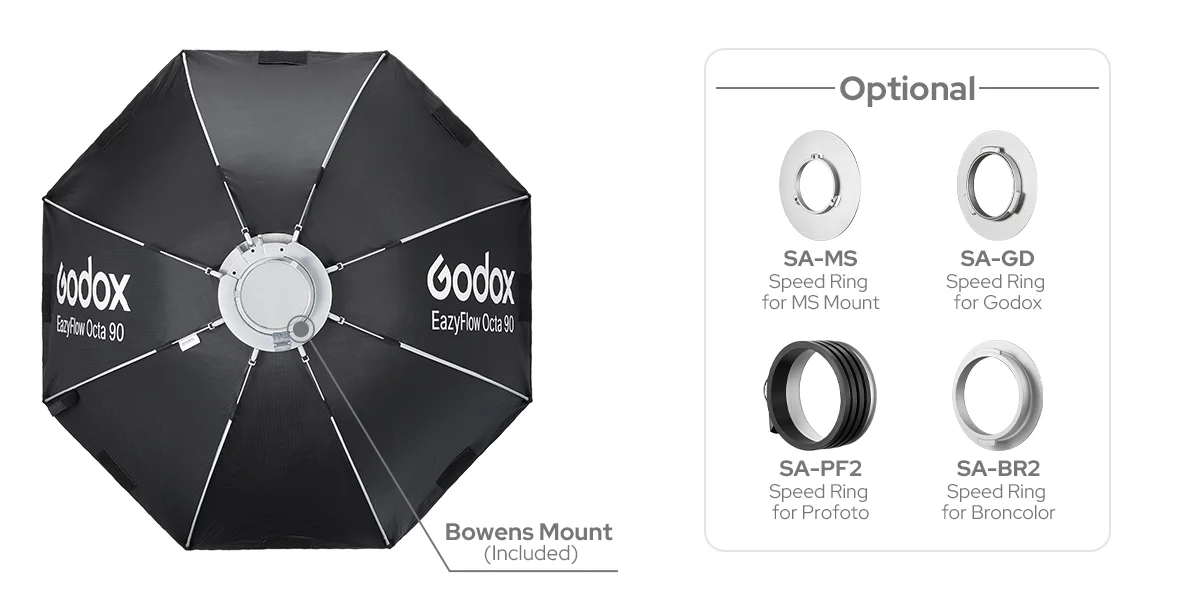
EazyFlow modifiers are supplied as standard with a metal ring in the widely used Bowens mount, allowing them to work immediately with most studio flashes and continuous LED lights. The mounting ring is often treated simply as an adapter for attaching the modifier to a light, but in practice it is the component that absorbs the forces generated when the rods are tensioned. Once mounted on the light, the entire weight of the unfolded softbox also acts directly on the mount.
For this reason, the EazyFlow series uses a robust metal speedring designed for frequent folding and unfolding. The speedring itself is also replaceable. The softbox construction supports optional rings designed for Godox, Profoto, Broncolor and MS systems. This means that the softbox and frame are independent of a specific mount. If the lighting system in a studio changes, or when working in a mixed-equipment environment, there is no need to replace the entire set of softboxes – only the connecting ring needs to be changed.
Geometry, depth and the silver interior of the light chamber
In addition to the width or diameter of the modifier, its depth is an equally important structural parameter. It determines the physical distance between the light mount and the front diffusion surface, as well as the angles at which light reflects inside the softbox. For example, the Octa 120 has a depth of approximately 54 cm, the rectangular 60 × 90 cm version around 42 cm, and the compact 30 × 45 cm size approximately 28 cm.
EazyFlow works as a three-dimensional light chamber with a highly reflective silver interior. Light emitted by a flash tube or COB LED spreads inside the chamber, reaches the side walls, reflects from them and only then, after being mixed, travels towards the front. This construction prevents light energy from being lost on dark interior surfaces and helps distribute the output evenly across the entire emitting surface.
Two-layer diffusion and the apparent light source
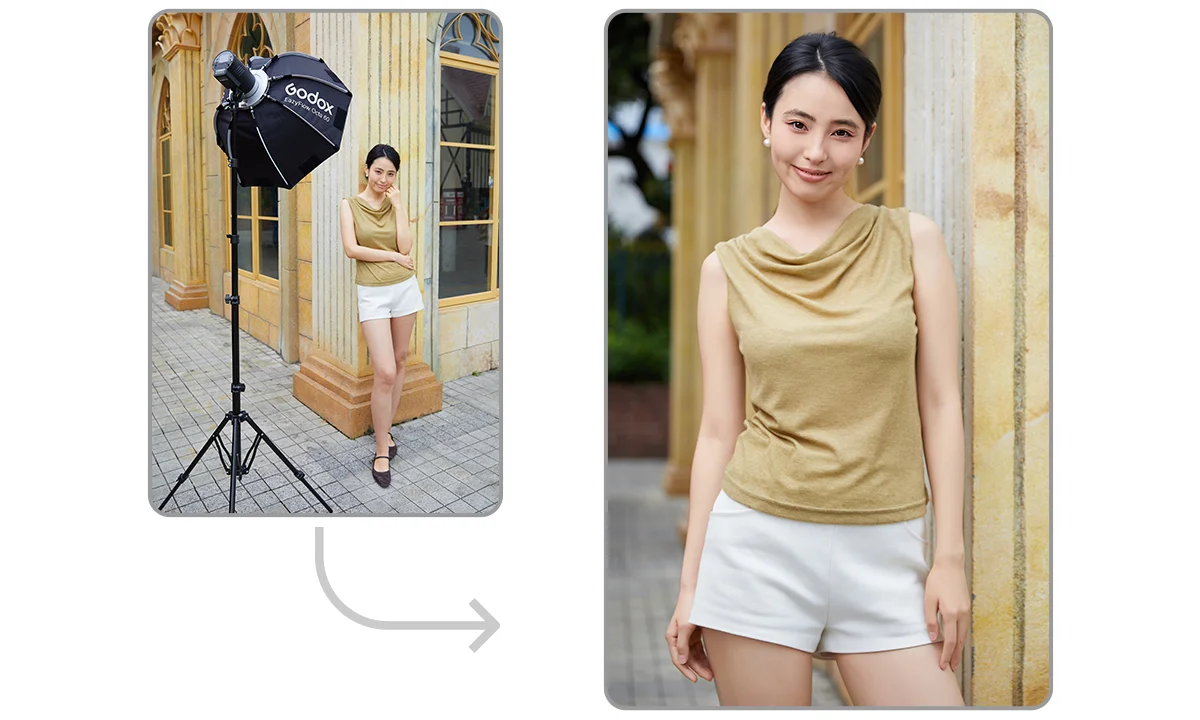
EazyFlow uses two layers of diffusion fabric, each serving a different purpose. The first layer is suspended inside the softbox, directly in front of the light source. It acts as an equalising element and reduces the formation of a distinct hotspot along the axis of the light. The second layer forms the outer front of the softbox, and its surface becomes the apparent light source from the perspective of the photographed subject.
This combination means that instead of seeing a small flash tube, the illuminated subject sees a large, uniform luminous surface. It is worth remembering that the softness of the light and the character of the shadows depend not only on the physical size of the softbox, but also on its apparent size as seen from the subject's perspective. A large softbox placed very far away will produce harder light than a smaller modifier positioned close to the model's face. The choice of dimensions should therefore always take into account the planned working distance and the size of the photographed scene.
How the shape of the front affects the light and reflections
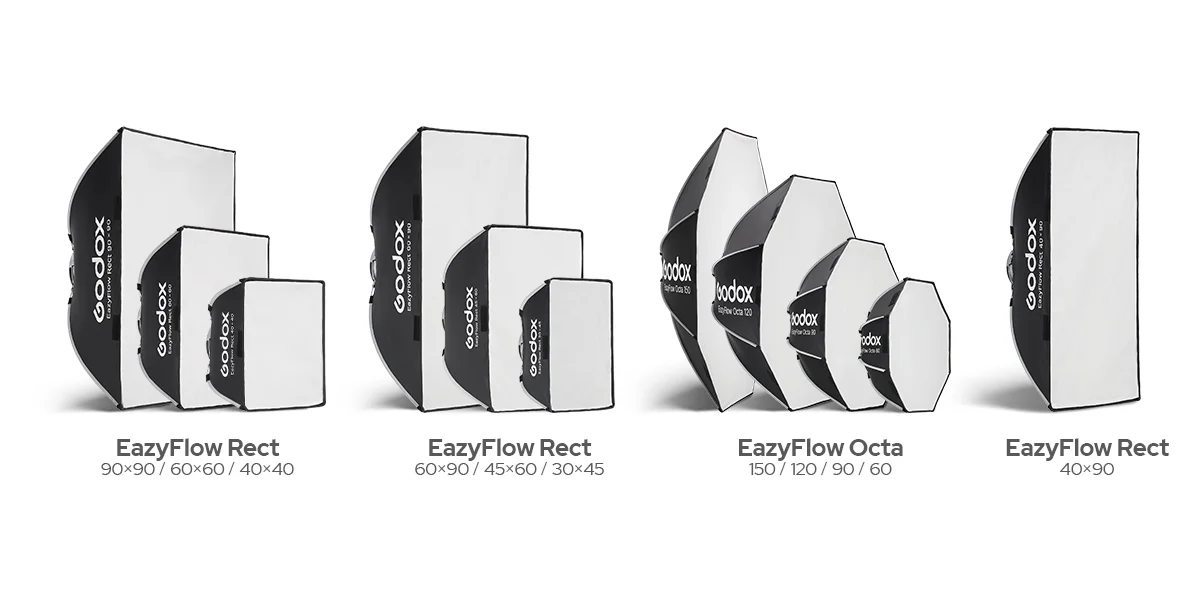
The EazyFlow series includes four main softbox shapes, each offering different practical characteristics and producing a different reflection shape in a model's eyes or on product surfaces. The square version creates a regular, symmetrical surface that effectively imitates natural window light and works well as a versatile key or fill light. The rectangular version offers greater freedom of orientation – positioned vertically, it matches the proportions of the human figure well, while rotated by 90 degrees it can illuminate a wider frame more evenly.
A strip softbox, with its long and narrow shape (such as the 40 × 90 cm version), is designed for creating precise reflections on cylindrical or glossy surfaces and for building rim or edge lighting around a subject. The octagonal Octa, on the other hand, produces a more natural, rounded catchlight thanks to its multi-sided shape and offers a very large emitting surface valued in portrait and beauty photography.
Grid for precise control of light spread
Each EazyFlow softbox comes with a fabric grid (honeycomb). Its purpose is not to change the softness of the light or reduce the size of the emitting surface, but to limit the angle at which light leaves the modifier.
The grid allows light travelling perpendicular to the front surface to pass through while restricting rays escaping to the sides. In practice, this makes it possible to maintain soft light on the model while preventing unwanted spill onto the background or neighbouring elements of the set. With the strip version, the grid creates an exceptionally precise tool for shaping rim or edge lighting.
Practical use and changing habits on set
It is also worth keeping in mind the physical consequences of using large modifiers. A larger softbox means not only greater weight (from approximately 0.84 kg for the smallest rectangular version to 2.1 kg for the Octa 120), but also significantly greater leverage acting on the light stand. Outdoors, an unfolded softbox behaves like a sail, so a stable stand and proper counterweighting are essential for keeping the setup secure. The greatest advantage of EazyFlow, however, is the way it changes the workflow during a shoot. When changing a modifier no longer requires several minutes of wrestling with rods, photographers are much more likely to switch between different shapes and sizes during a session. Moving from a large Octa for portraits, to a rectangular softbox for wider shots, and then to a strip for rim lighting becomes a quick, routine operation. EazyFlow therefore streamlines the softbox construction and adapts it to dynamic working conditions while maintaining full control over the quality and shaping of the light.
